
Guides · 2026年11月23日
Alishan and the forest railway: the mountain, planned
Alishan is Taiwan's great mountain outing, a high forest of ancient cypresses reached by one of the world's famous narrow gauge railways, and it punishes casual planning: the railway books out inside a short reservation window, the sunrise train runs to a timetable set by the sun, and the weather at altitude is a different season from the plain. How the railway and the forest work, what to book and when, the walks that matter, and the choice between a long day trip and a night on the mountain.
Alishan is not a place you drift into. The forest recreation area sits high in the mountains of Chiayi County, the air thin and cool, the trees older than the country that protects them, and every route up is a commitment: a narrow gauge railway that climbs from the plain in switchbacks and spirals, or a mountain road of a hundred bends. The visitors who love Alishan planned it. The visitors who shrug at it arrived at noon in cloud, missed the walks, and rode down in the rain. This guide is the planning version: how the railway reservation system works, what the sunrise train demands of you, which walks to protect in your day, and how to choose between the day trip and the overnight. Our events calendar carries the mountain's festival seasons, cherry blossom above all, as their dates are set.
The railway: a logging line that became the journey
The Alishan Forest Railway was built to bring timber down, and its engineering is the first sight of the trip. From Chiayi, the main line climbs into the mountains on narrow gauge track, gaining altitude through switchbacks, tunnels and bridges, the vegetation changing with the height: bamboo and betel nut low down, tea gardens and cedar forest higher, until the train runs through cloud into the cypress country at the top. Inside the recreation area, three short branch lines do the local work: the Zhushan Line, which carries the sunrise crowds to the Zhushan viewpoint; the Shenmu Line, the Sacred Tree line, down to the giant tree country; and the Zhaoping Line, the short hop across the upper park. The railway's own ticket office pages give the branch line fares plainly: the Zhushan Line at NT$150 full fare, the Shenmu and Zhaoping lines at NT$100 each, with half fares for children, seniors and other concession holders as the office defines them.
The main line is the booking problem, and the railway states its rules without decoration. Tickets can be reserved within fourteen days of travel, not counting the travel day itself, with the window extending across the following weekend for Friday and Saturday bookings as the booking system notice sets out. Each identity document can book at most six tickets per line per travel day. Bookings open online through the railway's own booking system, and the popular departures, in blossom season and on holidays, go inside the window's first hours. The Zhushan sunrise train has its own rule: tickets for the next morning can be bought until noon the day before, and its departure time is set by the sunrise, announced the previous afternoon at the station, on the railway website and at the recreation area entrance. On the morning this guide was checked, 16 November 2026, the railway's system showed the Zhushan line leaving at 05:20 with the last return at 07:10, against a sunrise of 06:35. Treat those as the shape of the thing, never as your timetable: your date will have its own.
The forest: what you are actually going up for
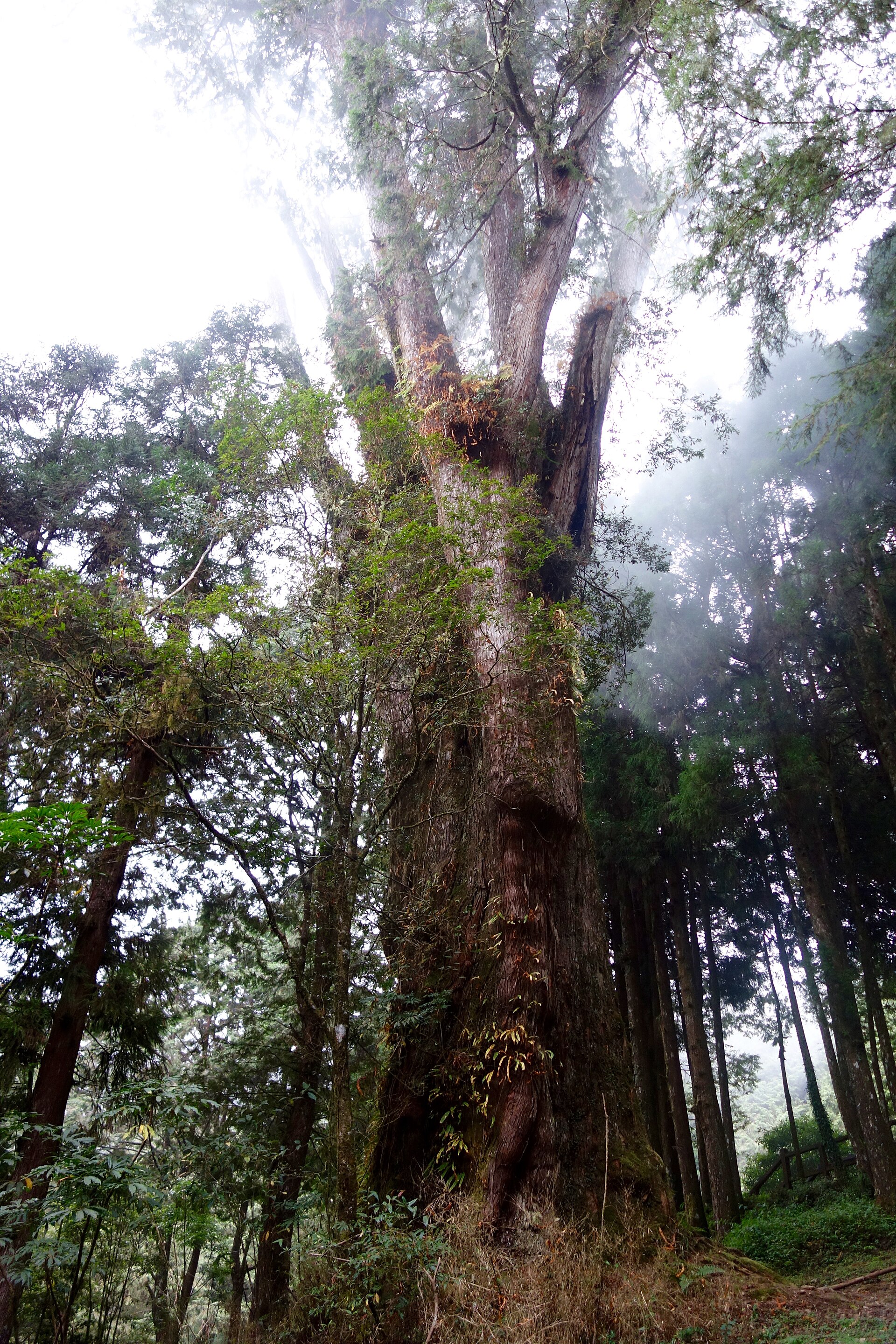
The Alishan National Forest Recreation Area is a managed mountain forest of trails, ponds and giant trees, and its heart is the cypress groves. The red cypresses of Alishan are the reason the railway exists: the logging era took the accessible giants, and the survivors, trees of a thousand years and more, now stand protected along the giant tree trails, their reddish trunks rising into mist that arrives most afternoons as reliably as the trains. The Sacred Tree itself, the original giant, fell decades ago and lies in state where it stood; the living giants along the boardwalks carry the story now, numbered and named, each with its own viewing platform and its own crowd at noon and its own silence at eight in the morning.
The walks organise themselves into a natural circuit. Zhaoping Park, at the upper station, is the blossom ground in spring and a quiet garden of ponds and cherry trees out of season. The Sister Lakes, two still ponds in the forest, sit on the path down toward the Shenmu area, with the famous pavilion between them. The giant tree boardwalks link the great trunks. The museum and the old locomotive displays fill the gaps for railway romantics. None of it is mountaineering; all of it is at altitude, on paths that climb and descend in short, steady pulls, and the right pace is a slow one with layers in the daypack. The recreation area charges its own entrance fee at the gate, separate from any train ticket; the day tour in the click plan states its figure as NT$300 per person in its inclusions, and independent travellers should check the forestry recreation site for the current gate price before they travel rather than trusting any guide, this one included.
Sunrise at Zhushan: the ritual, assessed
The sunrise is Alishan's sacrament: the early train to Zhushan, the crowd on the viewing platforms, and, on the mornings the weather allows, the sun rising over a sea of cloud with the Yushan range on the horizon. It is genuinely beautiful when it works. It also fails often, because a mountain that makes its own cloud does not consult its visitors, and a grey dawn at altitude is a cold way to start a day. The advice is this: if you sleep on the mountain, take the sunrise train, because you are there and the cost is only sleep. If you are day tripping, do not build the day around a sunrise you cannot reach in time; the forest in morning light, walked early before the day crowds, gives you most of the magic with none of the gamble. Either way, buy the Zhushan ticket by the noon deadline the day before if you mean to ride, and check the announced departure time that afternoon rather than assuming any printed hour.
Day trip or overnight: the real choice
The day trip is possible and popular: up from Chiayi in the morning, the forest circuit through the middle of the day, down by evening. Its costs are real. The mountain gives you its middle hours, which are its busiest and, in the wet season, its cloudiest, and the railway's full climb in both directions makes for a long seated day. The tour in the click plan shows the commercial version of the shape: an 08:00 start from Chiayi station, Fenqihu Old Street on the way up, two hours and twenty five minutes inside the recreation area, and the station again by the end, a workable sampler that reviewers praise for its guides and warn is brisk.
The overnight is the connoisseur's version, and this guide recommends it when your itinerary allows. Sleeping in the recreation area buys you the two best windows on the mountain: the late afternoon, when the day buses leave and the mist moves through empty boardwalks, and the early morning, when the giant trees stand in clean light and the sunrise train is a short ride rather than a fantasy. It also splits the railway: up one day, down the next, each direction enjoyed rather than endured. The costs are a night of limited dining and early sleep, at altitude prices. For photographers, for walkers, and for anyone who has come to Taiwan partly for this mountain, it is worth it. Base the night before or after in Chiayi city if the mountain hotels do not suit: the city at the foot of the line has its own night market culture and the railway's garage park of retired locomotives, and it makes an easy staging post.
Fenqihu deserves its sentence in either version. The old railway town at the line's midpoint, built around its station and its lunchboxes, sells the famous railway bento that travellers have eaten on this line for generations, from shops along its short old street. If your train stops there, eat one. If your tour stops there, as the day tour below does for fifty minutes, the bento is the stop's purpose.
Book the railway the day your window opens, sleep on the mountain if you can, walk the giant trees early, and let the cloud do what it will: Alishan planned this way survives its own weather. For the blossom and festival seasons that change the mountain's crowds, our This Weekend page and the events calendar keep the current dates.
Book the Alishan day tour from Chiayivia Viator · affiliate link
值得注目的活動,直接送到你的信箱。
每週三,把週末及之後值得注目的活動,直接送到你的信箱。