
Guides · 2026年11月20日
Dihua Street and Dadaocheng: Taipei's old trading quarter
Before Taipei had a skyline it had a wharf. Dadaocheng, on the Tamsui River in Datong District, was the port quarter where tea, cloth, camphor and Chinese medicine changed hands, and Dihua Street is its surviving main street: a run of arcaded shophouses that still sells dried goods, herbs, tea and fabric by weight and by the bolt. How the quarter rose, what to look at as you walk it, the temple at its heart, where the eating is, and how to end the day at the wharf as the light goes.
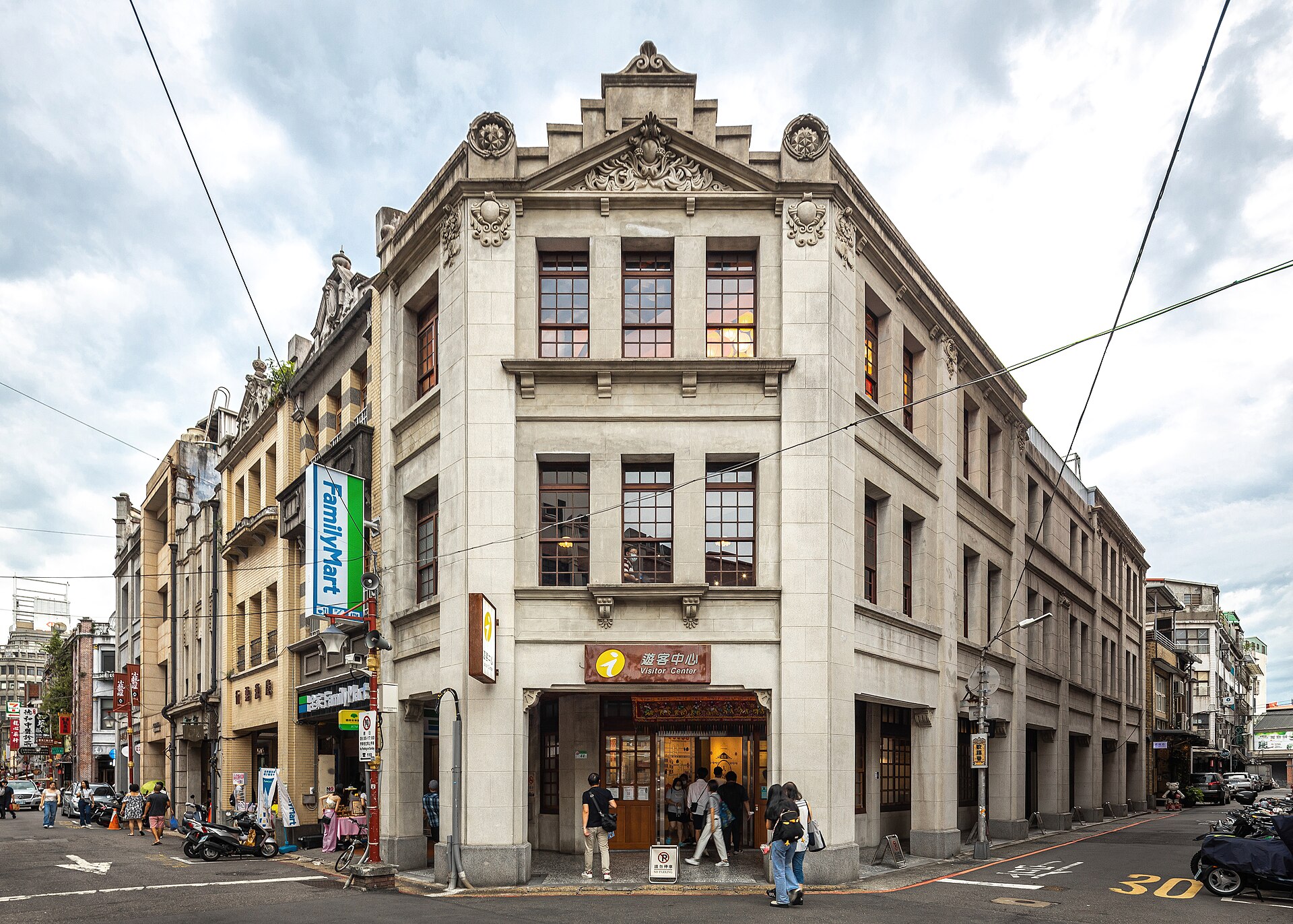
Every old city has one street where its money was made, and in Taipei that street is Dihua Street. It runs north through Dadaocheng, the river quarter in Datong District a short walk west of Taipei Main Station, and for well over a century it was where northern Taiwan's trade was weighed, wrapped and shipped. The goods have narrowed since the port years, but they have not changed their nature: this is still a street of dried mushrooms and medicinal herbs, of tea in tins and cloth in bolts, sold from shophouses whose decorated fronts were built to advertise the firms behind them. If you have done the towers and the big museums and want the Taipei that existed before them, this is the half day to take. Our events calendar carries what is on in the capital while you are here.
How a rice drying ground became a port
The name Dadaocheng points at the quarter's first use: a large open ground for drying rice. Its trading life began with a feud. In 1853, settlers from Tong'an in Fujian lost a violent clash in Mengjia, the older river settlement now called Wanhua, and moved north to rebuild at Dadaocheng. They laid out their shops along what became Dihua Street, and the timing served them well. When the port of Tamsui opened to foreign trade in 1860, a wharf was built at Dadaocheng, and the quarter became the main entrepot in Taipei: the place where goods came off the river and into the city's shops.
Tea made the quarter rich. From the 1860s, Formosa oolong was processed and traded here for export, and tea, cloth and camphor were the cargoes that mattered, alongside the dried goods and Chinese medicines that supplied the island itself. Foreign trading houses set up near the wharf, local firms grew fat behind them, and the street filled with the substantial houses of merchants who wanted their prosperity visible from the pavement. Dadaocheng's fortunes as a trading center declined during the Japanese colonial era as the city's center of gravity shifted east, and that decline, oddly, is what saved it: a quarter nobody needed to rebuild kept its old street almost whole.
Reading the street as you walk it
Start at the south end, near Beimen Station, and walk north. The first shops on Dihua Street appeared in 1851, and the street's building stock tells its own timeline. The earliest houses are plain Minnan style shophouses, narrow and deep, with the shop at the front and living quarters behind and above. Later fronts add the ornament the trade could suddenly afford: the Baroque style decoration of the Taisho era, curved pediments, carved stucco, family names and trade marks worked into the facade. Look up as much as you look in. The ground floors are for selling; the upper fronts are the archive.
The proportions are the other thing to notice. A shophouse lot is only a few metres wide, because frontage on the trading street was the expensive part, and the buildings run back a long way to make up for it. Many have been restored in the last two decades, some as the same family businesses in modern dress, some as cafes, design shops and small galleries that have moved into the old shells. The mix is the point of the modern street: it is a working wholesale district that has learned to welcome browsers, not a museum quarter that has forgotten how to trade. Taipei City's own description of the Dihua commercial district makes the same point from the other side: groceries, traditional Chinese medicine, tea and fabrics are still the district's listed trades, and Yongle Fabric Market is still the place fabric buyers go.
What the shops actually sell, and how to buy
Four trades dominate, and each has its own etiquette. The dried goods shops sell the pantry of a Taiwanese kitchen in bulk: dried shiitake, bamboo shoots, shrimp, scallops, jujubes, goji berries, nuts and beans, much of it weighed out from open sacks and bins. Prices are marked and haggling is not the custom; asking what something is, and how it is cooked, is always welcome and usually starts a conversation. The Chinese medicine shops are the street's most atmospheric interiors, walls of small drawers behind a counter where herbs are weighed on hand scales. You do not need a prescription or an ailment to enjoy them; many sell the herbal teas and tonic ingredients that home cooks buy, and staff will explain what a packet is for.
Tea is the third trade, and the one with the deepest roots here. The old tea firms still trade on and around the street, and a tea shop is the best souvenir stop in the quarter: high mountain oolong and the other Taiwanese teas keep well, travel well, and come with a story the shopkeeper will happily tell while a tasting cup is poured. Fabric is the fourth. Yongle Market, at the southern end of the street, holds the largest cluster of fabric sellers in Taipei on its upper floors, bolts of cloth in every weight and pattern, with tailors in the same building who can turn a length of fabric into clothing. Even if you sew nothing, the market floors are a colour lesson in what the city wears.
One season transforms the street. In the weeks before Lunar New Year, Dihua Street becomes Taipei's New Year goods market, the most famous in Taiwan, and the pavements fill with stalls selling everything the festival table and gift basket require. It is crowded, loud and entirely worth seeing once; at any other time of year, a weekday morning is the street at its calmest and most itself.
The temple at the center: Xiahai City God
At No. 61, Section 1, Dihua Street stands the quarter's religious heart, the Xiahai City God Temple. It is not large, and the Taipei City Government's listing notes why it feels so intense: the temple houses the City God, his wife, the Chinese Cupid and some 600 other deities, giving it the highest statue density in Taiwan. It has kept its original scale for more than a century, never expanded, and it is packed with worshippers at almost any hour you visit.
The Cupid, the Old Man under the Moon, is the draw for many visitors: tradition holds that his standing statue shows a deity eager to get on with matchmaking, and singles come to ask for a partner while couples come to ask for a smooth road. You are welcome to watch, to light incense if you wish to do it respectfully, and to enjoy the temple decoration, which includes the cut and paste porcelain work and painted detail typical of a Minnan temple kept with care. The City God's birthday, on the thirteenth day of the fifth lunar month, brings the quarter's biggest celebration, with processions that have been a Dadaocheng institution for over a hundred years. If your trip lands on it, go; if it does not, the temple on an ordinary morning still shows you the quarter's working faith rather than its festival dress.
Eating in the quarter
Dadaocheng feeds its own first. The morning market streets around Cisheng Temple, one of the quarter's three great temples alongside Xiahai and Fachukung, hold food stalls that city guides describe as half century institutions: salty porridge, pork rib soup and the other slow breakfast dishes of old Taipei, eaten at shared tables under the trees in front of the temple. It is a morning scene; stalls open through the morning and wind down by mid afternoon, so build it into the start of a visit rather than the end.
For the rest of the day, the quarter eats in layers. Yongle Market has its own food stalls, old names selling snacks inside the fabric building. The side streets off Dihua hold noodle shops, dessert shops selling traditional sweets and shaved ice, and a growing run of cafes in restored shophouses where the coffee is modern and the building is not. Tea houses close the circle: sitting down to a properly brewed pot in a century old tea shop is the quarter's own idea of a rest, and it beats a takeaway cup on the move. None of this needs booking or planning beyond appetite; the quarter rewards grazing.
The wharf at the end of the day
Walk west from Dihua Street, through the No. 5 Water Gate, and you reach Dadaocheng Wharf on the Tamsui River. In the trading years this was the working edge of the quarter, where tea, cotton and silk textiles were loaded; the City Government's wharf listing records both that history and the modern afterlife, a riverside park and bikeway, a container market, and boat tours along the Tamsui River, with departures that depend on the river's tides. The wharf has also hosted major fireworks festivals, and on an ordinary evening it does something simpler: it gives the old quarter a sunset. The light goes down over the river, the container market stalls light up, and the merchants' street behind you has been ending its working day at this water gate for a century and a half.
The practical shape of a visit is easy. Give the quarter half a day at least, a full day if the fabric market or the tea shops catch you. Come by MRT to Beimen or Daqiaotou and walk in; the street itself is the sight, so there is no ticket to buy and no order you must follow. If you want the history explained as you walk rather than read, a guided walk is the one bookable extra that genuinely fits this quarter, and it is linked below. End at the wharf, and you have done Dadaocheng the way its own geography suggests: from the shops to the ships. For what else is on in Taipei during your stay, our This Weekend page keeps the current listings.
Book the Dadaocheng walking tourvia Viator · affiliate link
值得注目的活動,直接送到你的信箱。
每週三,把週末及之後值得注目的活動,直接送到你的信箱。