
Guides · 2026年11月29日
Hsinchu and the Hakka towns: the northwest, slowly
Hsinchu is famous for wind, glass and computer chips, but its older self is a temple city of rice noodles and meatballs, and its hills hold Taiwan's densest Hakka country: Beipu's monument packed old street and pounded tea, Neiwan's railway village, Guanxi's old lanes and Miaoli's wood carving town of Sanyi. A slow guide to the northwest that most visitors pass through at 300 kilometres an hour.
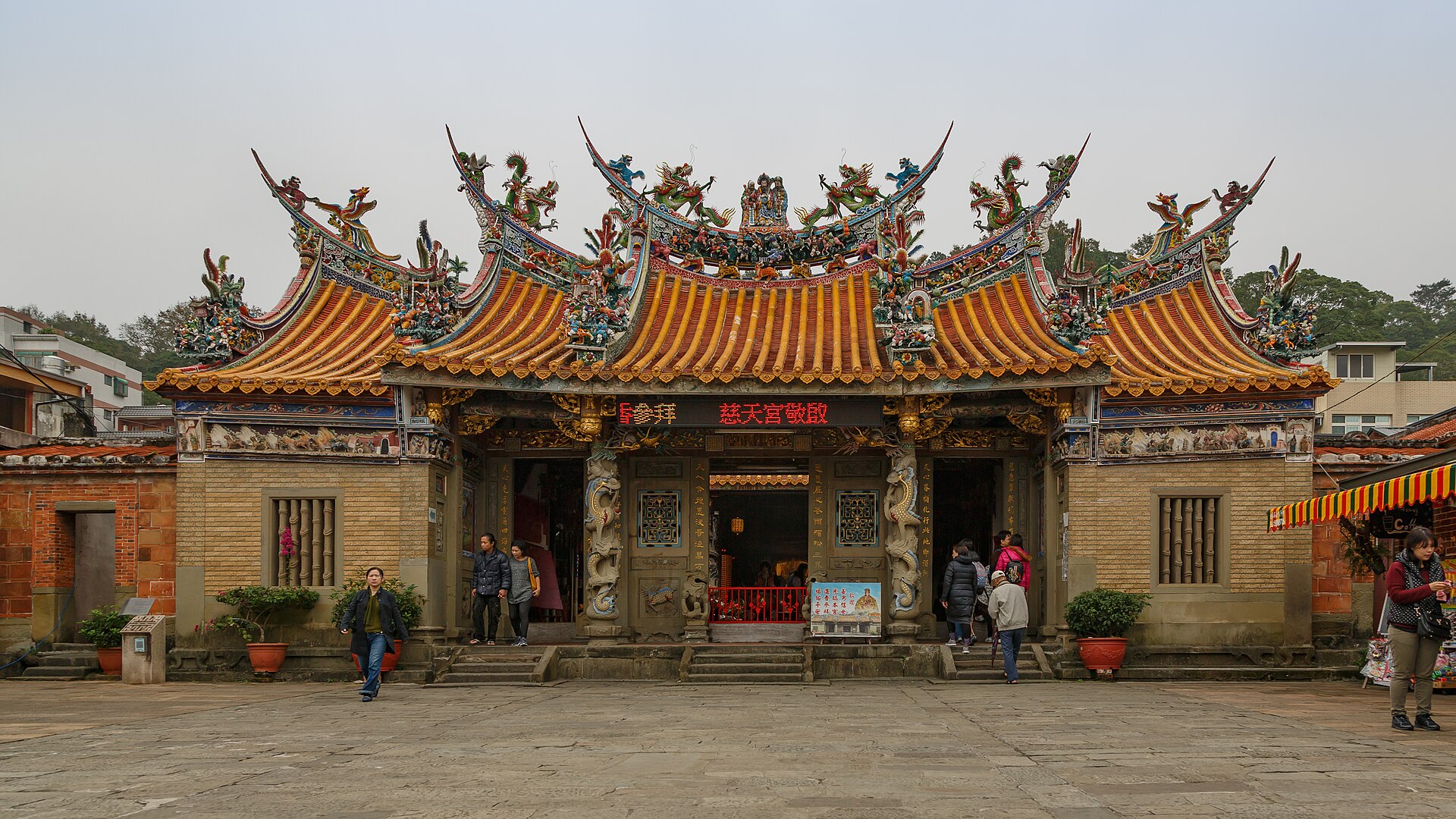
Northwest Taiwan is the part of the island the high speed rail made invisible. The trains stop at Hsinchu, in a new district of malls and science park offices, and most visitors change there or pass through, picturing a city of wind and semiconductors. The older northwest is something else: a small temple city where the noodles dry in that famous wind, and behind it a hill country of Hakka towns that kept their old streets, their pounded tea and their own language of food. The Hakka are roughly a sixth of Taiwan's population by the counts usually quoted, and Hsinchu County is their northern stronghold. This is a guide to doing the northwest slowly: a day in the city, then the towns, at bus and branch line pace. Our events calendar carries the county's festivals, including the tung blossom season each spring.
Hsinchu city: the temple and the wind
Give the city its morning. Hsinchu's heart is the Chenghuang Temple, the City God temple founded in 1748 and ranked among the most important of its kind in Taiwan, standing in the old centre a short walk from the railway station. What makes it essential is not only the temple, ornate and busy with worship, but the food market that fills the lanes around it, one of Taiwan's great temple food courts, where the stalls have served the same short menu for generations. Eat the city's two signatures here: rice noodles, the thin vermicelli that Hsinchu's persistent wind dries better than anywhere else in Taiwan, stir-fried and served with the city's other emblem, its pork meatballs in soup. The old saying runs that Hsinchu has the wind, Keelung has the rain; the noodles are the wind made edible.
The city's second craft is quieter. Hsinchu has made glass since the Japanese era, when local sand and gas met, and the Municipal Glass Art Museum in the parkland east of the station tells that story in a handsome old building; the science park wealth that remade the city grew from the same habit of making precise things. Between temple, market and museum, the city fills a day without effort. It just never advertises the fact.
Beipu: two hundred metres of monuments
Beipu, in the hills southeast of the city, is the Hakka town to start with, because it compresses everything into one short street. Beipu Old Street runs about 200 metres and holds seven historic sites along it, the highest density of designated monuments on any street in Taiwan by the Tourism Administration's own description: the Jinguangfu Mansion, the reclamation company office from the 1830s when Hakka and Hokkien partners jointly opened this frontier; the Jiang family's Tianshui Hall beside it; the Citian Temple at the street's heart, founded in the 1830s and rebuilt in wood in 1846, dedicated to Guanyin; and the Jiang A-Hsin Mansion, a western-style house from the tea export years. No other town in Taiwan puts its whole founding story on one walkable block.
Then eat and drink the culture. Beipu is the home of lei cha, pounded tea: tea leaves ground in a heavy ceramic bowl with peanuts, sesame and grains into a thick, savoury, meal-like drink, made by your own arm in the teahouses along the street, where the grinding is the entertainment and the point. The town's other emblem is Oriental Beauty, the honey scented oolong that the wider tea world knows, grown in these hills and sold in the old street's shops beside dried persimmons, Hakka floral cloth and mochi. Come on a weekday if you can; on weekends the whole of the northwest has the same idea.
Neiwan and Guanxi: the railway village and the quiet town
Neiwan, at the end of the short Neiwan branch line from Hsinchu, is the northwest's railway village: a former forestry and mining town whose old street runs from its little terminus station, past an old cinema turned restaurant, toward the suspension bridge over the Youluo River. Its foods are Hakka to the core, vegetable buns, wild ginger flower rice dumplings, flat noodles and mochi, and in April and May the hills around it carry tung blossom and fireflies, the season the branch line fills for. One honest note for current visitors: the suspension bridge has been closed since July 2025 by the listing checked for this guide, so plan the old street and the river paths rather than the crossing, and check the current state before you go.
Guanxi, west of Beipu on the old Provincial Highway 3, is the quieter sibling: a short old street of heritage shophouses, famous locally for its aged fruit teas, made by packing tea into citrus shells in the old Hakka way, and for doing very little, very well. Pair Guanxi with Beipu in one hill day and you have the region's rhythm: one town that performs its heritage, one that simply lives in it.
Xinpu: the persimmon town
One more town belongs in the circuit, by season. Xinpu, north of Beipu in the same Hakka hills, is Taiwan's dried persimmon town: each autumn the new crop is peeled, laid on bamboo racks and dried in the same northeast wind that dries Hsinchu's noodles, until the racks across the town's drying yards turn orange and the photographers arrive. The dried fruit, sweet and chewy, is the northwest's autumn souvenir, and Xinpu's old street and clan houses make it a natural pairing with Beipu in the drying months. Between the tung blossom of spring, the persimmons of autumn and Beipu's tea in every season, the Hakka hills run a year-round calendar that the slow traveller can enter at any point.
Sanyi and the Miaoli hills
South of Hsinchu, Miaoli County continues the Hakka story in a different material. Sanyi, on the railway's mountain line, is Taiwan's wood carving town, its main street a run of workshops and shops smelling of camphor, where carvers have worked the local timber for a century. Miaoli's old mountain line railway, with its brick tunnels and the broken bridge at Longteng, is the region's industrial poetry, and the county's Hakka museums and old stations reward the same slow approach. The high speed rail pass below is the practical spine for the whole northwest circuit: Hsinchu and Miaoli both have high speed stations, and the towns string from them by bus, taxi and branch line.
Get the THSR rail passvia Klook · affiliate link
Doing the northwest: the practical shape
Work the region in day-sized pieces from two bases. Hsinchu city, by its conventional railway station, is the base for the city itself and for Neiwan: the branch line climbs from the city terminus into the hills, so a city morning of temple and market pairs naturally with a branch line afternoon in the old street. Beipu and Guanxi pair as one hill day from the high speed station side, by bus, taxi or the tourist shuttle that serves the Lion's Head Mountain area, with Beipu's old street at midday for the lei cha teahouses and Guanxi's quiet lanes after. Sanyi is the southern day, reached on the conventional mountain line, and it pairs with Miaoli's old railway country rather than with the Hsinchu towns. Two or three days at this pace covers the northwest; a single day should choose one cluster and do it slowly, which is, after all, the region's whole argument.
Do the northwest slowly and it stops being the gap between Taipei and Taichung. It becomes what it has always been: the island's workshop and pantry, windy, skilled and fed by its own hills, with a temple city at its gate and a 200 metre street that holds a whole people's Taiwan story. For the blossom and festival dates that move through these towns, our This Weekend page keeps the current listings.
值得注目的活動,直接送到你的信箱。
每週三,把週末及之後值得注目的活動,直接送到你的信箱。