
Guides · 2026年11月25日
Kaohsiung in two days: the harbour city
Kaohsiung is Taiwan's maritime capital, a working port city that has spent two decades turning its waterfront into its front room: warehouse art districts, a light rail along the harbour, a ferry to a lighthouse island, and a pond of pagodas in the old city. A two day plan that runs the harbour on day one and Lotus Pond, the old streets and the night markets on day two, with the sunset at Sizihwan to finish.
Kaohsiung is the city Taiwan's north forgets to envy until it visits. It is the island's largest industrial center and its great southern port, a city of shipyards, steel and container cranes that has spent the years since the 2009 World Games doing something clever with its inheritance: turning the working waterfront into parks, art districts and a light rail promenade, while keeping the port working in plain sight. The Tourism Administration calls it Taiwan's Maritime Capital, and the climate helps the pitch: the marine air regulates the year, and Kaohsiung is generally sunny when Taipei is grey. Two days is the minimum worth doing. Day one belongs to the harbour. Day two goes inland to the old city around Lotus Pond and ends, as Kaohsiung evenings should, at a night market. Our events calendar carries the stadium concerts and harbour festivals that fill this city's calendar.
Day one, morning: Pier-2 and the warehouse waterfront
Begin at the Pier-2 Art Center, because Pier-2 is where the new Kaohsiung announced itself. The center's name is literal: it stands by the second pier of Kaohsiung Port, in a run of former port warehouses that once stored goods for the harbour trade. Local artists began the site's transformation in 2001, and the city government, which took control in 2006, developed it into the south's leading art base, running festivals of design, steel sculpture and container art among the warehouses. Today the district is galleries, exhibition halls, a cinema, bookshops, cafes and large scale outdoor art spread along the water, most of it free to wander, with ticketed exhibitions inside individual warehouses for the ones that catch you.
The waterfront stitches itself together if you let it. From Pier-2, the harbour path and the Circular Light Rail run along the Asia New Bay toward the Kaohsiung Music Center on the Love River's mouth, its coral like towers standing over the water, and the exhibition center beyond. Ride the light rail rather than walking the whole line in the heat; it is the city's own tour vehicle, slow and scenic, passing cranes and moored ships between the art stops. The Great Harbor Bridge by Pier-2, the swinging pedestrian bridge across the harbour inlet, is the district's toy and its viewpoint in one. Give the waterfront the whole morning and do not hurry it: this is a city showing you its working face, dressed for visitors without pretending the work stopped.
Day one, afternoon: the ferry to Cijin
After lunch, cross the water. Cijin, the long thin island that shelters the harbour, is reached by the short ferry from Gushan Ferry Station, the iconic way in, as the city's own Love Kaohsiung magazine puts it, with scooters riding the ferry alongside the foot passengers in a cheerful harbour scrum. Cijin is the port's beach suburb and its oldest quarter in one: a Mazu temple among its first buildings, a lighthouse on the hill at the harbour mouth, the Star Tunnel cut through the rock below it, seafood streets where the harbour's catch is sold by the tray, and a long beach facing the Taiwan Strait on the island's far side.
The pattern on Cijin is simple and pleasant. Walk or cycle the island's length at an easy pace, eat seafood early rather than late, climb to the lighthouse and the old fort on the headland for the view back across the harbour to the city you left, and be on the beach side for the late light. Then ride the ferry back as the harbour lights come on, and finish the day on the mainland shore at Sizihwan, the bay at the foot of Shoushan famous for its sunsets over the strait, counted among the city's classic sights. A harbour day that ends watching the sun drop into the water from the port's own promenade needs no improvement.
Day one, evening: the Love River
The Love River is Kaohsiung's front parlour after dark. It runs from the inland districts down through the city center to the harbour at Love River Bay, its lower banks converted into riverside parks, lit bridges and boat landings. The city's sightseeing material describes the lower river as a popular recreational strip where dragon boat and lantern festivals are held and where the night lights reflect on the water; the solar powered Love Boats work the lower river in the evening, and the paths on both banks carry the city's walkers, runners and romantics. Take the boat if the queue is kind, walk the banks if it is not, and eat in Yancheng, the old district behind Pier-2, where the harbour workforce's restaurants still outnumber the visitor ones. It is the right end to a harbour day: the river that drains the city, delivering you back to the sea.
Day two: Lotus Pond and the old city of Zuoying
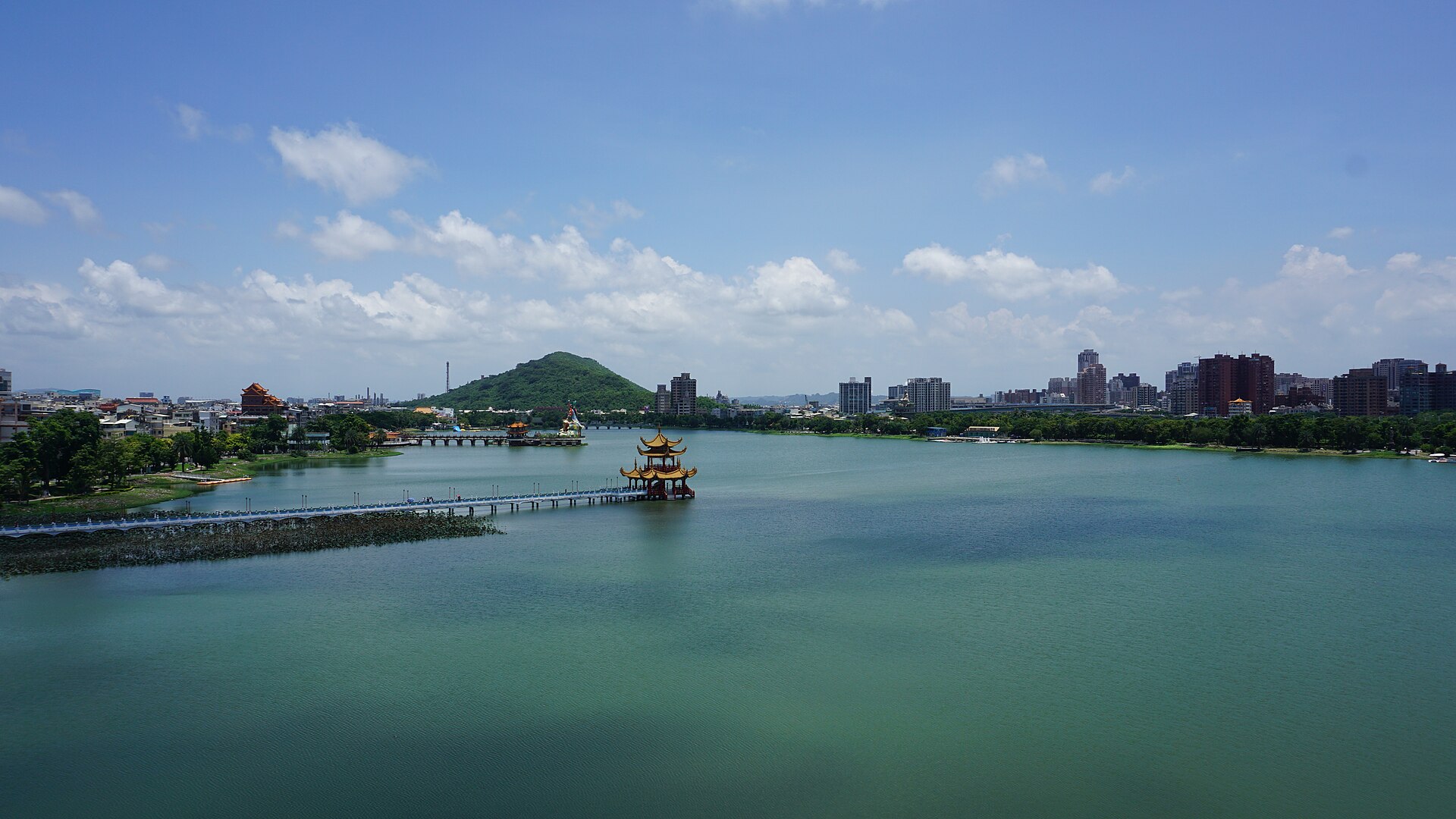
Day two turns inland, to the old county city of Zuoying and its famous pond. Lotus Pond is a lake of temples and pavilions on Kaohsiung's northern edge, and its architecture is exuberantly literal: the Dragon and Tiger Pagodas, twin towers you enter through a dragon's mouth and leave by a tiger's, the Spring and Autumn Pavilions standing on their pier over the water, statues and temple fronts ringing the shore. The hero photograph above shows the pond's scale: a green lake in the middle of the old city, pavilions on piers, the hill of Banpingshan behind. Walk the shore path in the morning before the heat, visit the pagodas, and continue to the old city wall and gates of Zuoying nearby, the remains of the Qing era county seat, which give the district a history older than the port's.
The afternoon can go two ways. Fo Guang Shan, the great Buddhist monastery complex in Dashu District northeast of the center, with its Buddha Museum and its towering statue, is the city's major excursion: a half day of monumental, serene, carefully organized Buddhism that draws pilgrims and the simply curious in equal numbers. The private tour in the click plan combines Fo Guang Shan with Pier-2 and Sizihwan for travellers who want the driving done. Or stay in the city: the Kaohsiung Museum of History, in the former city government building by the Love River, holds more than 8,000 artifacts of the city's development in the city's own telling, and the shopping and coffee streets of the center fill a gentle afternoon. Either way, keep the evening free.
Book the Kaohsiung private day tourvia Klook · affiliate link
Day two, evening: the night market finish, and where to base
Kaohsiung eats its evenings in the open. Ruifeng Night Market, by the arena in Zuoying, is the locals' sprawling favourite, a grid of stalls where the city's students and families do their grazing; Liuhe, the older tourist market near the center, runs the seafood and papaya milk line that made it famous. Our city by city night market guide covers both in its Kaohsiung section. Choose Ruifeng if you have followed this guide's geography, since your day two ends in the north of the city anyway, and let the market be dinner.
Base along the harbour or the Love River if you can: the Yancheng and Qianjin districts put Pier-2, the ferry, the river and the MRT within a short ride of your bed, and the light rail turns the waterfront into your corridor. Zuoying, by the high speed rail station and Lotus Pond, suits a one night stop built around day two. The stay button below is the city's wired search. Two days will show you a city that rebuilt its identity around its port without sanding off the port: cranes over art warehouses, ferries under office towers, temples on a pond and a river lit at night. Kaohsiung is not Taipei's understudy. It is the other Taiwan, sunny side up, and it knows it. For concerts and harbour events during your dates, our This Weekend page keeps the current listings.
值得注目的活動,直接送到你的信箱。
每週三,把週末及之後值得注目的活動,直接送到你的信箱。