
Guides · 2026年11月26日
Kenting and the south coast: Taiwan's tropical end
At the bottom of Taiwan the island turns tropical: coral coast, white sand bays, a fortified lighthouse on the southernmost point, and a national park that wraps the whole tip of the Hengchun Peninsula. How Kenting works, which beaches suit which hours, the Eluanbi and Maobitou headlands, the forest above the coast, Hengchun's old town walls, and the practical truth that this is a place to drive, base in one spot, and let the days run slow.
Every country has an end of the line, and Taiwan's is Kenting. The Hengchun Peninsula, in Pingtung County at the island's southern tip, is where the mountains finally give up and the land runs out into three seas: the Taiwan Strait to the west, the Pacific to the east, and the Bashi Channel to the south. Kenting National Park wraps the tip, Taiwan's only tropical national park in the Tourism Administration's description, established in 1982 and covering 33,268 hectares of land and sea: mountains, forest, pasture, lakes, sand dunes, beaches and coral reefs in one protected sweep. It feels different from the rest of Taiwan, and not only in temperature. The light is harder, the vegetation is coastal and wind shaped, the pace is holiday pace, and the main street lights up at night like a resort town that knows exactly what it is. This guide is the south coast: the headlands, the beaches in the right order, the forest above them, and the old town that anchors it all. Our events calendar carries the peninsula's festivals and race weekends.
The shape of the place: one road, two coasts
Kenting confuses first timers because it is not a town with sights; it is a peninsula with a road around it. Kenting Street, the night strip in the middle of the southern coast, is the postal address most visitors use, but the sights string out along the coast road in both directions: South Bay and the Kenting Forest Recreation Area behind the strip to the north, the Sail Rock and Eluanbi headland to the east, and Maobitou, Houbihu marina and Baisha Bay around the western shore. The national park headquarters publishes suggested itineraries that make the same point with timings: its forest and seashore day runs the visitor center, the forest recreation area and Sheding Nature Park before the coast stops at Chuanfan Rock, the Shadao shell beach exhibition, Eluanbi Park and the drive home. You will drive, or be driven, for most of what you see here. Distances are short; the stops are many; the right vehicle is whatever lets you stop often.
Base choice follows from the shape. Kenting Street suits visitors who want the night market on their doorstep and the beach at South Bay a short walk away, and who accept resort noise as the price. Hengchun, the old town a few kilometres north, suits drivers who want a real town, cheaper beds and the peninsula as a day loop. The quieter bays suit anyone with a scooter or car and no need for a strip. There is no wrong base, only a wrong expectation: nowhere in Kenting is walkable to everything, and planning as if it were is the one mistake this coast punishes.
Eluanbi: the southernmost point and its fortified lighthouse
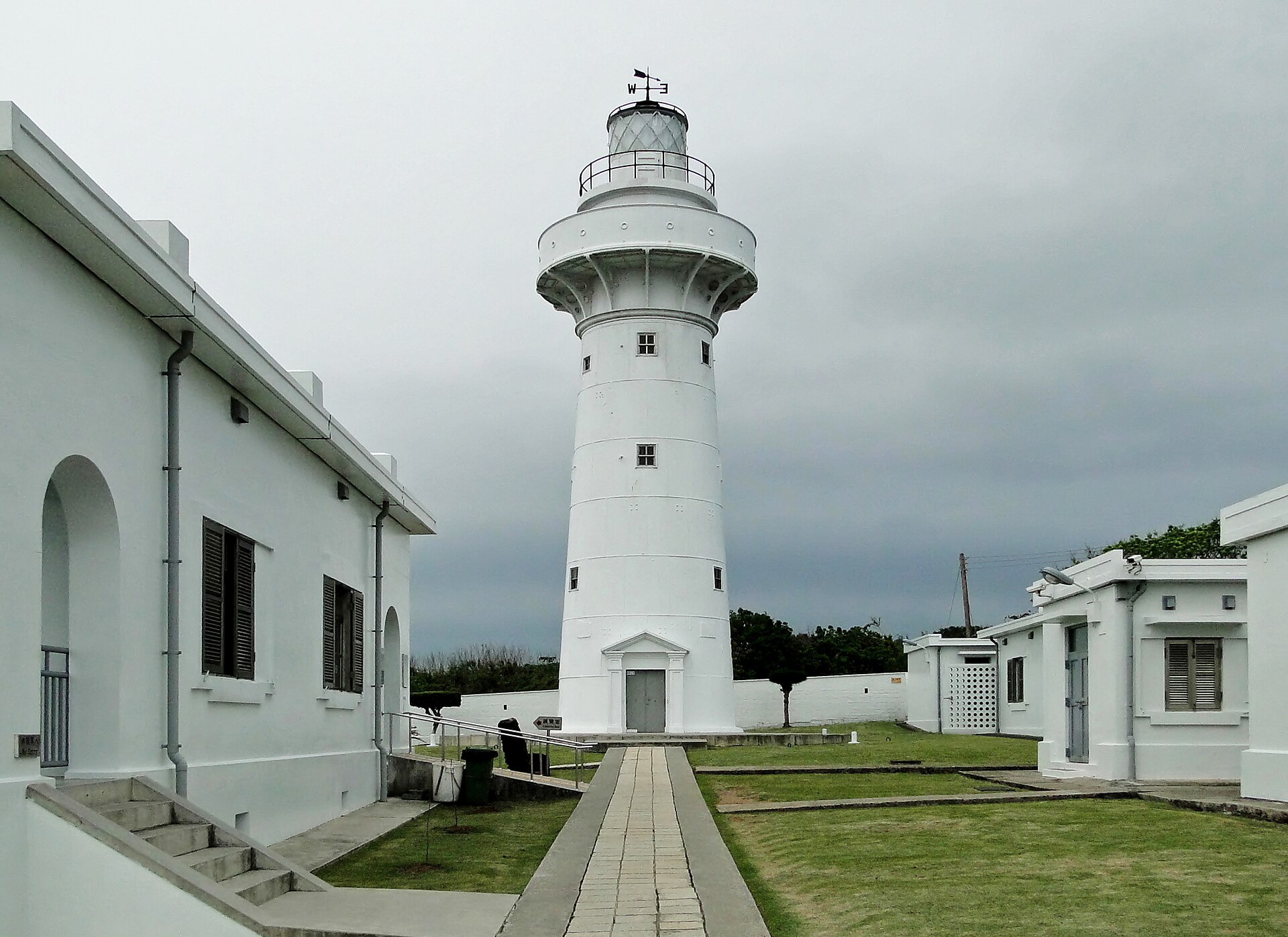
Eluanbi is the peninsula's punctuation mark, Taiwan's Tail in the Tourism Administration's phrase, the island's southernmost point. Eluanbi Park, created in 1982, covers 59 hectares of headland around its famous lighthouse, with paths through geological, botanical and bird rich coastal ground that was also a site of Kenting's prehistoric cultures. The lighthouse is the story: called the Light of East Asia, it stands 21.4 metres high and is reputedly the brightest lighthouse in Asia, built in the 1880s as a fortified structure, walled and defended, because this coast's shipwrecks and conflicts made an undefended light untenable. The hero photograph shows the compound as it survives: white tower, white walls, white station buildings, severe and beautiful against the green headland.
The administration lists the park's hours as 09:00 to 18:00 in the summer season, April to October, and 09:00 to 17:00 in winter, November to March, closed on Mondays. A November visit, like the week this guide is published in, runs on the winter pattern: go in the morning, walk the paths to the southernmost point marker and the sea views where the Pacific and the strait meet around the cape, and do not leave the headland for the hot middle of the day. Standing at the end of Taiwan, with Orchid Island a rumour on the horizon in clear weather, is the peninsula's essential ceremony. Everything else is beaches.
The beaches: choosing by the hour
Kenting's beaches divide by character, and the day divides them further. South Bay, Nanwan, is the busy one, the long curve nearest the main strip with the full apparatus of a resort beach: swimming, water sports, umbrellas, crowds. It is the right choice for an easy morning swim and the wrong one for solitude. Baisha, White Sand Bay, on the western shore, is the beauty: a sheltered arc of pale sand and clear water, quieter by design and by distance, the beach the park's itinerary material pairs with the western coast stops. Xiaowan, the small bay by Kenting Street, is the convenient evening swim. Shadao, on the eastern road, is a shell sand beach protected for its geology, viewed through its exhibition hall rather than swum from, and worth the stop on the Eluanbi run for exactly that reason: this coast's sand is coral and shell, ground by the sea, and Shadao is where the park explains it.
The rule that governs all of them is the sun. Kenting's tropical light is not a metaphor; the middle of the day belongs to shade, lunch and the forest, and the beaches belong to the early morning and the long late afternoon, when the water is warm, the light is kind and the day visitors have thinned. Swim where the flags and the locals say to swim, respect the winter monsoon surf on the eastern shore, which is a viewing coast in the windy season rather than a swimming one, and let the headlands take the midday hours.
Maobitou, Houbihu and the western shore
The western headland answers Eluanbi across the tip. Maobitou and Eluanbi mark the two southernmost tips of Taiwan, the administration notes, and Maobitou is the wilder sculpture: a coral reef coast eroded into slumps, potholes, reef pinnacles and sea caves, its name taken from a protruding reef rock said to look like a squatting cat. The water off this shore is the park's underwater glory, clear over stony and soft corals that cover the seabed, with tropical fish in numbers that make the snorkelling boats from Houbihu marina, the harbour just north, the coast's main water activity. Houbihu itself is the working harbour of the pleasure coast: yacht marina, tour boats and a seafood market where the day's catch is the menu, the right lunch stop on a western shore day.
Inland from this shore, Longluan Lake's nature center watches the peninsula's birdlife, and the park headquarters' own forest and seashore itinerary strings the west coast together in a day: South Bay, the sisal industry exhibition that recalls Hengchun's hemp farming years, Longluan Lake, Houbihu for lunch, Maobitou, then east along the south coast through the Sail Rock and Shadao to Eluanbi and Longpan. Copied or adapted, it is the correct geography for a full coastal day, and it leaves the forest for another morning.
The forest above the coast, and Hengchun town
Kenting is not only a coast. The Kenting National Forest Recreation Area, in the hills at 200 to 300 metres above the sea, covers 75 hectares of planted and native tropical forest with more than 1,000 species of plants in the administration's count, seventeen scenic points linked by walkways, a looking glass tree over 400 years old with buttress roots above the ground, the Fairy Cave of lit stalactites, a hanging banyan valley, and a 27 metre observation tower from which the whole southern tip, Eluanbi, the strait, the channel and the Pacific, lies out in one turning view. It is the peninsula's shade, its botany lesson and its best midday refuge, and Sheding Nature Park next door adds the wild version, uplifted coral and grassland with the coast below.
Hengchun town, the peninsula's anchor, closes the guide's circuit. It is one of Taiwan's best preserved old towns, its Qing era walls and gates still standing around a working center of markets, temples and noodle shops, famous in the island's imagination for the folk singing tradition that takes its name. Stay a night here if the resort strip is not your style, eat where the town eats, walk a section of wall at dusk, and drive the coast from a base that was a town before it was a destination. However you arrange it, give Kenting three days if you can and two at the least: one for the eastern headland and Eluanbi, one for the west shore and the forest, and the evenings for the street. Taiwan ends here, in coral, wind and warm water, and it ends well. For what is on during your stay, our This Weekend page keeps the current listings.
Stay in Pingtung and Kentingvia Booking.com · affiliate link
值得注目的活動,直接送到你的信箱。
每週三,把週末及之後值得注目的活動,直接送到你的信箱。