
Guides · Mon 09 Nov 2026
The east coast by train: Hualien, Taroko and Taitung as one slow trip
Taiwan's east coast has no high speed rail, and that is its luck. The Taiwan Railway line from Taipei runs along cliff edges to Hualien, then turns inland down the East Rift Valley to Taitung, and it makes the country's best slow trip. This guide plans it honestly, including the hard part: what Taroko Gorge actually looks like since the April 2024 earthquake, which of its trails are open, and what to build the days around instead.
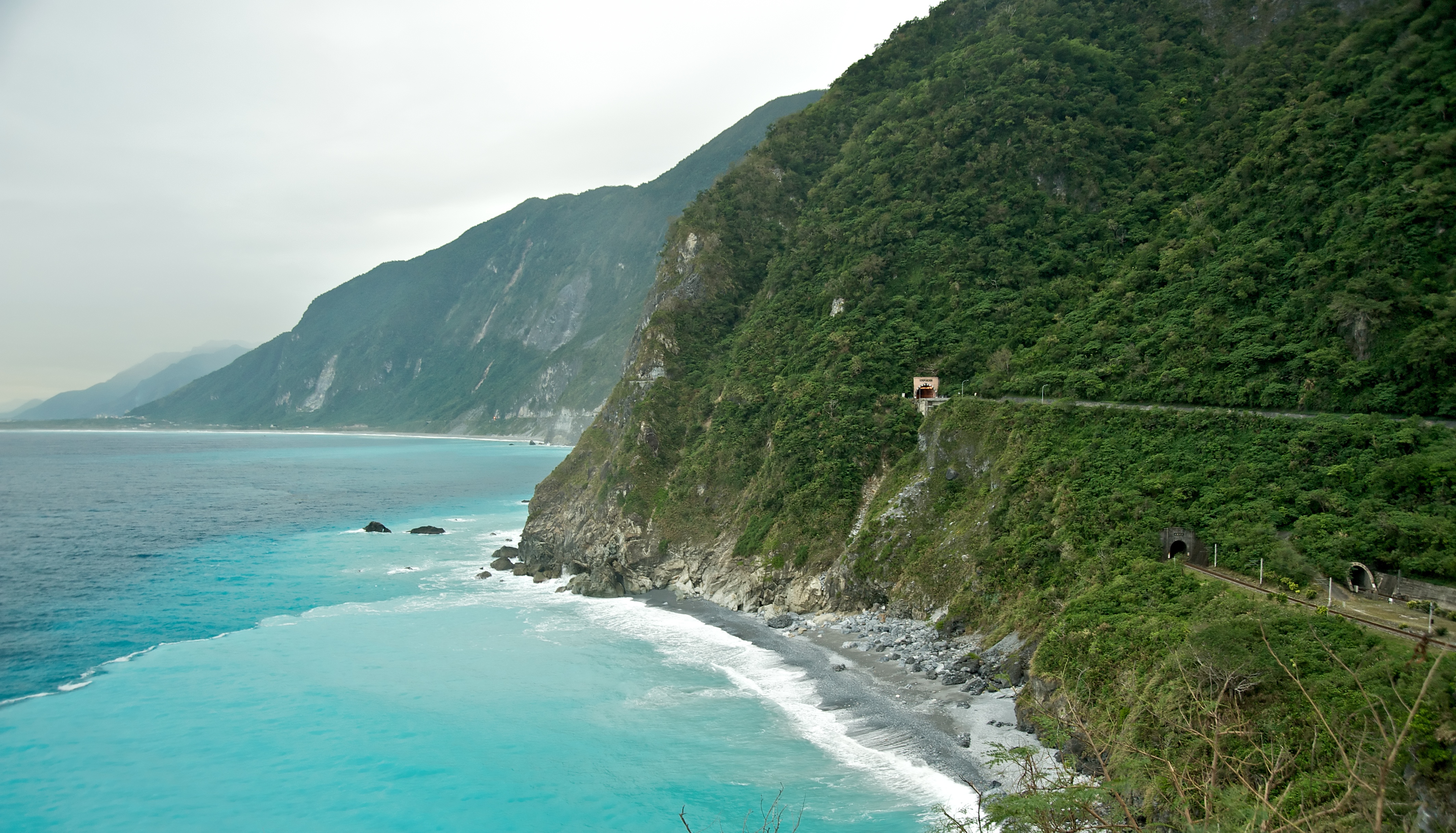
Every other side of Taiwan has the fast train. The east coast does not, and once you have ridden it you stop thinking of that as a lack. The line south from Taipei is Taiwan Railway the whole way: out through Yilan, then onto the North Link Line, where the railway shares the cliff edge with the Pacific, diving through tunnels and coming out over beaches, until it reaches Hualien. From Hualien the Hualien to Taitung Line turns its back on the sea and runs down the East Rift Valley, a flat green corridor of rice fields between two mountain ranges, to Taitung. Taken together it is the best slow trip in the country, three bases and two great train rides. It needs one honest chapter in the middle, about Taroko, and this guide does not skip it.
The railway itself
The fastest expresses, the Puyuma, Taroko and Tze-Chiang services, cover Taipei to Hualien in about two to two and a half hours, the quickest in around two and a quarter hours, and the journey is the scenery: sit on the left side heading south and the coast is your window for the second half of the ride. These are reserved seat trains and they sell out at weekends and holidays, so book when Taiwan Railway opens sales, 28 days ahead, rather than at the station on the day. Hualien to Taitung is the gentler leg, about one and a half to two hours on an express, all of it valley. There is no through road journey that competes with either leg, and no high speed rail on this side of the mountains at all, which is precisely why the east coast still moves at this pace.
Hualien: the base that earns its nights
Hualien city is a working port town that happens to sit in front of extraordinary scenery, and it rewards two or three nights rather than one. North of the centre, Qixingtan is a crescent of grey pebbles facing the open Pacific, a place for sitting, cycling the coastal path and watching the light change, not for swimming, because the shore shelves steeply and the current is strong. South of the city, Liyu Lake in Shoufeng is the calm version of the same county, a still lake under green hills where you can walk the shore paths and take a boat out. Evenings belong to the Dongdamen Night Market, the county's biggest, laid out by the old railway lands. Treat Hualien as the trip's anchor: the gorge day, the coast day and the lake all run out of it, and the station is where both halves of the railway meet.
Stay in Hualien
via Booking.com · affiliate link
Taroko, plainly: what is open and what is not
Taroko Gorge is the reason most people first come to Hualien, so here is the true position, from the Taroko National Park Headquarters' own current trail information, checked for this guide. The earthquake of 3 April 2024 hit the gorge hard. Rockfalls buried trails and damaged the highway, and the park has been reopening in stages ever since, on the headquarters' programme rather than on any guidebook's timetable.
The famous trails are still closed. The Shakadang Trail, the Swallow Grotto trail, the Tunnel of Nine Turns trail, the Baiyang Trail with its Water Curtain Cave, the Eternal Spring Shrine trail, the Buluowan terraces and the Zhuilu Old Road all remain shut for reconstruction, with no reopening dates published for them, and the park states that the easy grade trails along the gorge highway stay closed. Anyone selling you a walk on those trails is selling you an old itinerary.
What is genuinely open is still worth the day. At the park entrance, the visitor centre is open and the steep Dekalun Trail climbs behind it, continuing to the Dali and Datong village trail for strong walkers. Through the gorge, the Tianxiang area at the top end is open: the Tabido Trail and the Xiangde Temple area above the river are the walkable heart of the gorge as it now stands. At Lushui, short sections of the Lushui Trail and the Lushui-Wenshan Trail have been open since February 2026, a few hundred metres each, walked out and back. And on the coast road north, the Chongde Trail is open to its second viewing platform, which is the reliable way to see the Qingshui Cliffs, the near vertical wall where the mountains meet the Pacific. One more discipline decides whether the day works at all: Provincial Highway 8 through the gorge is a repair site, and traffic is released through it only in timed windows during the day, five a day in recent notices, with the road closed at night. Check the park headquarters' site the day before you go, because the windows and the trail list both move.
The practical way to do all this without a car is the day tour wired on this site, and it earns its place here for a specific reason: its current itinerary is built out of the open list, not the old one. It stands you at the Qingshui Cliff observation deck, takes you into the safe, open areas of the gorge, walks the Tabido Trail and Xiangde Temple at Tianxiang, and finishes on the pebbles at Qixingtan. That is an honest Taroko day as the park exists now.
Book the Taroko and Qingshui day tourvia Klook · affiliate link
South through the Rift Valley
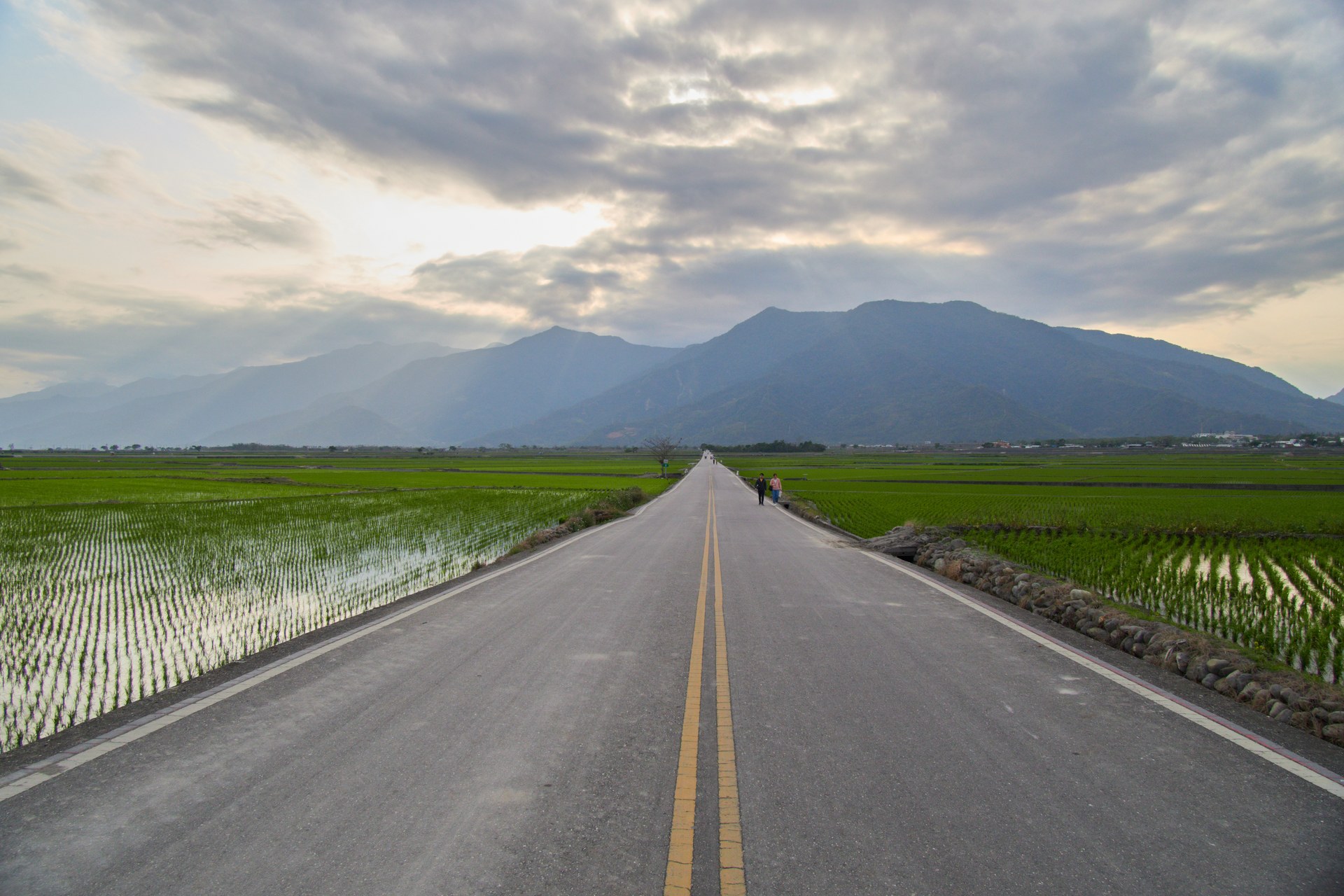
Leaving Hualien, the train turns inland and the trip changes key. The Hualien to Taitung Line runs the length of the East Rift Valley, between the Coastal Mountain Range on your left and the Central Mountain Range on your right, through a valley floor of rice, orchards and small farming towns. This is the leg to ride in daylight and at window pace. Chishang is the stop everyone talks about, a rice town famous for its station bento boxes and for fields with no power poles in them, where you hire a bicycle at the station and ride out to the tree lined Brown Boulevard. Guanshan, further south, runs the same trick at a smaller scale with its ring road around the paddies. You can do the valley as a straight ride of about two hours, but breaking it for a night, or even a long lunch stop with bikes, is what turns a transfer into the middle of the trip.
Taitung: the Pacific again, slower
Taitung is where the east coast exhales. The city is small, the pace is visibly slower than Hualien, and the coast north of it is the county's gallery: the black sand and surf breaks around Jinzun, where our Taiwan Open of Surfing guide covers the November competition beach, and the eight arched footbridge of Sanxiantai reaching out to its island. Inland, the Zhiben hot spring area in the hills west of the city is the classic end of trip soak, covered in our Taiwan hot spring season guide. Stay two nights if you can. Taitung is also where the slow trip can hand you onward: the South Link Line west to Kaohsiung if you are circling the island, or the train back north the way you came, which nobody who rode it down in daylight has ever called a wasted day.
Stay in Taitung
via Booking.com · affiliate link
The shape of the trip
Four or five days does it properly: a morning express from Taipei, two or three nights in Hualien with the gorge day taken on the park's current terms, a daylight run down the valley with a stop at Chishang, and two nights in Taitung before you ride on or back. Book the express trains when the 28 day window opens, check the Taroko trail and road status the day before the gorge day and again on the morning itself, and keep one flexible half day in Hualien for weather, because the east coast's rain is as real as its cliffs. Set a Taiwan What's On alert on the Hualien and Taitung listings while you plan, including the Liyu Lake waterfront light festival across the new year, and we will email you as east coast dates confirm.
More reading on the articles page, or go straight to the events calendar.
Noteworthy events direct to your inbox.
Get what's noteworthy for the weekend and beyond every Wednesday in your inbox.